 admin
adminHoly Week is the most sacred season in the Christian calendar, marking the final days of the earthly ministry of Jesus Christ. While much attention is often given to Palm Sunday and the events from Maundy Thursday to Easter Sunday, the earlier days (Holy Monday to Holy Wednesday) carry profound lessons that deepen our understandiNg of the faith we profess.
THE LESSONS OF HOLY MONDAY
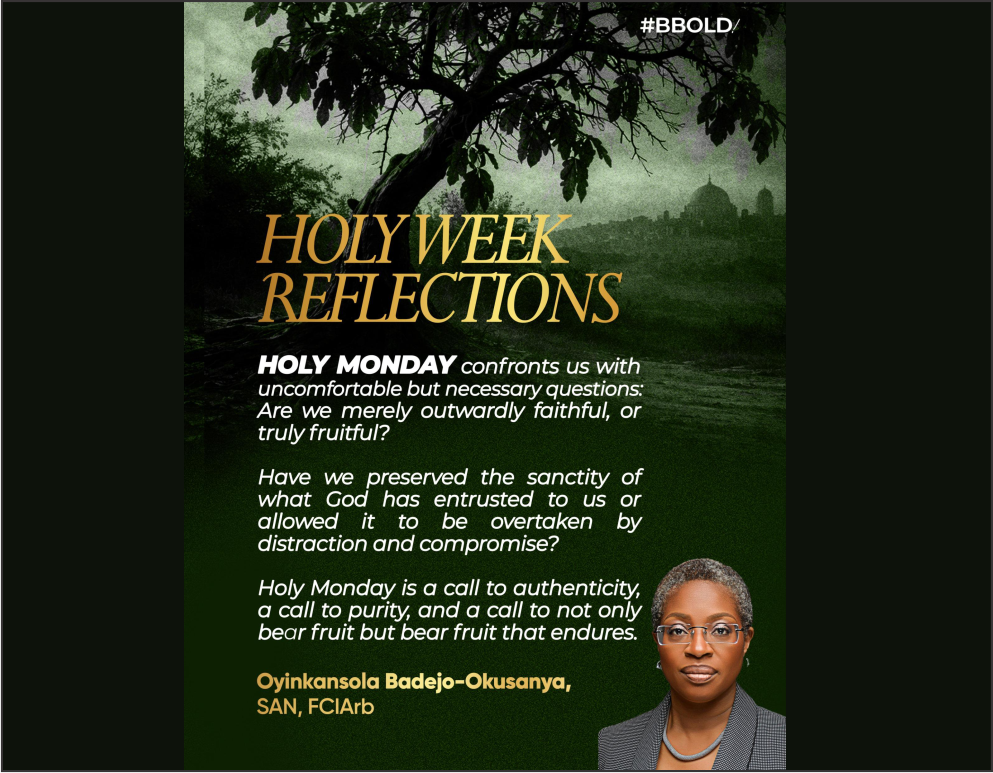
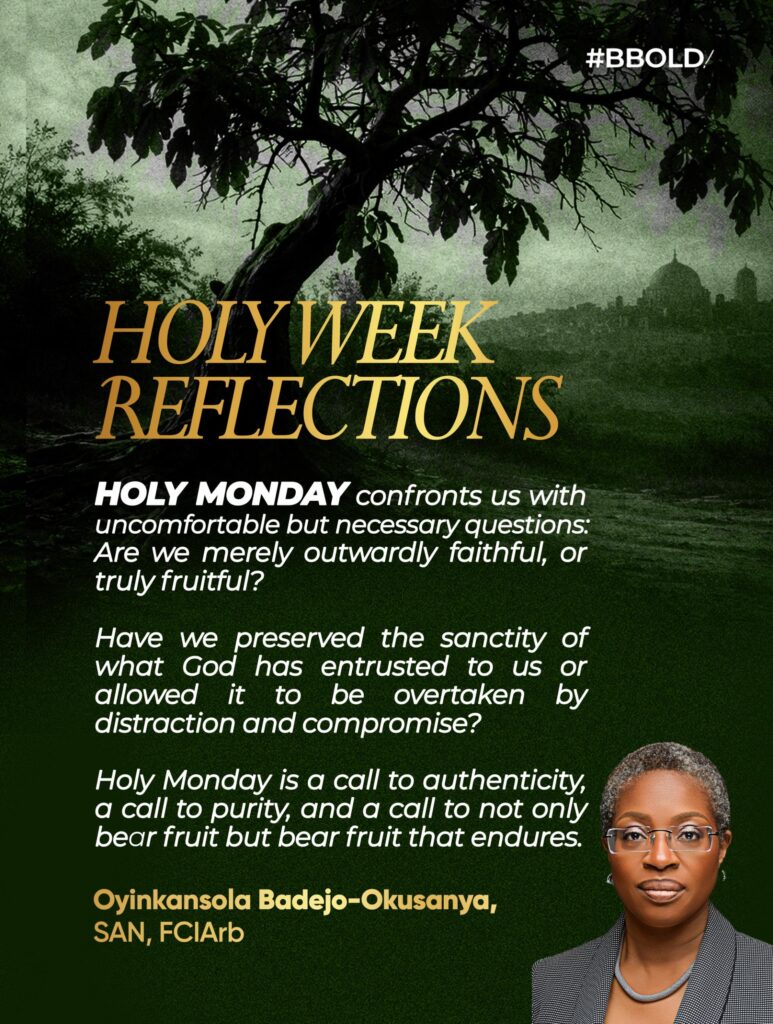
On Holy Monday, Jesus returned to Jerusalem from Bethany. Along the way, He encountered a fig tree full of leaves but without fruit. In response, He cursed the tree (Matthew 21:18–22; Mark 11:12–14, 20–21).
This was no ordinary reaction—it was a powerful symbol.
Fig trees typically bear fruit before their leaves appear. The presence of leaves without fruit made the tree deceptive in appearance. Through this act, Jesus revealed a deeper spiritual truth: outward expressions of faith are meaningless without the evidence of a transformed life. It was a rebuke of spiritual hypocrisy—a warning against the illusion of righteousness without substance.
The lesson was immediate and piercing. A people who had long awaited the Messiah stood on the brink of rejecting Him. There was profession, but no fruit. Appearance, but no authenticity.
That same day, Jesus entered the Temple and found it overtaken by merchants and moneychangers. With righteous authority, He drove them out, declaring:
“My house shall be called a house of prayer, but you have made it a den of thieves.” (Matthew 21:13)
In that moment, He confronted not just commercial activity, but the corruption of what was meant to be sacred. Worship had been displaced by profit; reverence, by routine.
The religious leaders were outraged, yet restrained—conflicted by His authority and the growing crowds who gathered as He taught and healed throughout the day. By evening, He withdrew again to Bethany.